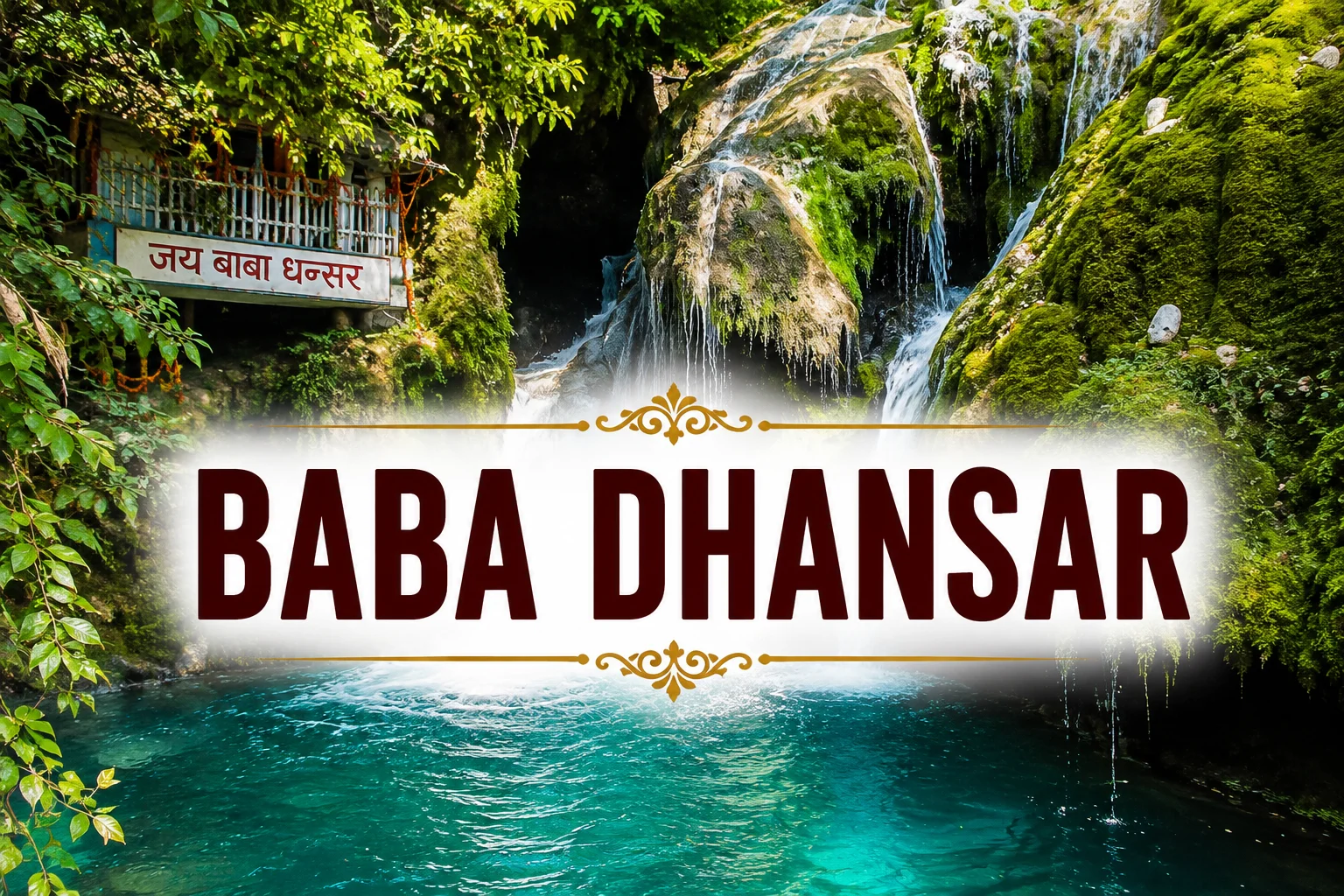
Baba Dhansar
- Distance from Katra~15 km
- Travel Time~30–40 minutes by road
- Best SeasonMarch to June, and after monsoon (September–October)
The shrine that most yatris never hear about
Ask ten pilgrims at the Katra bus stand where they plan to go after darshan and nine of them will name the same handful of places. Baba Dhansar rarely makes the list. It has no famous skyline and no organised tourist circuit, and you will not find it on most postcards. Yet for people who live in the surrounding villages, it is one of the most meaningful places in the area, and for travellers who want a quiet, local, unhurried spiritual stop, it is among the best choices within easy reach of Katra.
The site lies at the village of Karua, along the road that runs from Katra toward Reasi. It is built around a natural spring-fed pond, known locally as Karua Jheel, with a small cave shrine beside it and a Nag temple nearby. A short stream flows out from the site, and this is where most visitors wash and pray. Bathing in the pond itself is not permitted, which keeps the water clean and preserves the sense that it is a sacred place rather than a swimming hole.
What the place feels like
The first thing most people notice is the sound. After the noise of Katra, with its loudspeakers, horns, vendors and constant movement, Baba Dhansar is quiet in a way that feels almost surprising. You hear running water, the occasional temple bell and the murmur of people chanting softly to themselves. The air is cooler near the pond, and the tree cover gives shade for much of the day.
You park near the road and walk a short distance, about 200 metres, to reach the site. The path is easy, though it can be slippery in wet weather. At the water’s edge you will usually see a few families, local devotees offering flowers and milk, and sometimes a priest leading a small ritual. Visitors are free to sit, pray quietly or simply watch. There is no pressure to hurry, and no long queue except at festival times.
The cave shrine beside the pond is small and unadorned. Do not expect grand architecture. The power of the place comes from its simplicity: water, stone and faith, held in a small space and tended by people who have known it all their lives.
The Shiva connection, and the Nag temple
Baba Dhansar is associated with Lord Shiva, and the cave beside the pond is regarded by devotees as a place of his presence. The presence of a Nag temple adds another layer. In the traditions of Jammu region, serpent deities guard springs, forests and mountain passes, and many water sources carry a Nag shrine. Local people see Baba Dhansar as part of this network of sacred waters.
Like many shrines, the site has stories attached to it, some of them connected to epic traditions and some to village memory. We do not claim they are verifiable history. They are better understood as the way a community remembers its sacred places. If you want to hear them, the best source is a local priest or a villager near the site, who will usually tell them with more feeling than any guidebook can.
The result is a pairing that many pilgrims find fitting. At Vaishno Devi you honour the Divine Mother. A short drive away you honour Shiva. For devotees, the combination feels complete, and it is one reason many families add a Shiva shrine, whether Baba Dhansar or Shiv Khori, to their journey.
When it is at its busiest, and when it is at its best
The site draws its largest crowds around Mahashivratri, the great night of Shiva, when devotees come from across the district to bathe, pray and stay awake through the night. If you want a festive, communal atmosphere and do not mind crowds, this is the time to go. Expect long lines, fairground energy, food stalls and plenty of noise. Arrive early, hold on to children, and keep valuables close.
For a contemplative visit, choose any other time. Early on a weekday morning is usually the calmest of all. March to June is pleasant, with mild days and a comfortable walk. September and October, after the monsoon, bring clear skies and a fuller stream, and the landscape is green and fresh. In peak monsoon, the approach can become slippery, and the road may be affected by rain, so take care and check with your driver.
How it fits into a Katra trip
Because the site is only about 15 kilometres from Katra, roughly 30 to 40 minutes by road, it slots into a yatra with almost no planning cost. There are three natural moments to go.
On arrival day. If you reach Katra by mid-morning and your room is ready, a visit to Baba Dhansar gives you a gentle introduction to the area while you wait for the climb the next day. It is not tiring, and it helps the body adjust.
On the morning after darshan. This is the most popular choice. After the long climb, your legs will be sore and your mind will be full. A short drive and a short walk to a quiet place by the water is exactly the kind of day that suits that state. You can sit for an hour, offer your thanks and head back for a late lunch.
On the way out. If you are leaving for Jammu or Srinagar in the afternoon, you can stop at the shrine on the way, though check that the direction suits your route. Your driver will know.
An easy half-day, hour by hour
A good plan for a half-day visit runs roughly like this. Leave Katra after breakfast, around eight or nine in the morning, so that you arrive before the heat builds. Reach the roadside parking within forty minutes and walk to the pond. Spend the first half hour simply sitting. Then wash your hands and feet at the stream, offer prayers at the cave shrine and visit the Nag temple. Allow an hour in total, longer if you want to talk to local people or if you are attending a ritual.
On the way back you may want to stop at a roadside stall for tea, and you can be at your hotel by midday. If you are travelling with children, build in a rest, because they will not necessarily find the pond as moving as adults do, and a short play near the stream and a snack will keep everyone happy.
Etiquette and small courtesies
Baba Dhansar is a living place of worship, so a few simple courtesies make the visit better for everyone.
- Dress modestly, covering shoulders and knees. Remove shoes before the shrine.
- Do not enter the pond to swim or wade. Use the stream for washing, and keep soap and shampoo away from the water.
- Keep voices low. Photographs are generally fine in the open areas, but ask before photographing people at prayer or inside the cave.
- Do not leave plastic, food waste or flowers wrapped in polythene. Carry a small bag for rubbish, and take it with you.
- If a priest offers a blessing or tika, accept it with respect. A small donation is customary but never demanded.
Safety and the practical side
The rocks and the banks around the water can be slippery, especially after rain or in the early morning when dew has settled. Wear shoes with grip, and hold children’s hands near the stream. Elderly visitors should take the short path slowly and use a stick if they are unsteady.
Facilities are basic. There are few shops, little shade in places and limited toilets, so carry water, snacks and tissues. If you are travelling in the monsoon, ask your hotel about the road, as local routes can be affected by rain or slides. And as always in this region, carry identification and keep your phone charged.
How it compares with other short temple visits
Visitors often ask how Baba Dhansar differs from Shiv Khori, another Shiva shrine on the Katra circuit. The honest answer is that they are very different experiences. Shiv Khori is a long cave walk with a self-formed Shivling at the end, a day trip of several hours, and a place that draws large crowds. Baba Dhansar is a small, quiet shrine that takes an hour or two, set by a pond and stream, with little infrastructure. If you only have time for one, choose Shiv Khori for the drama of the cave and Baba Dhansar for peace. If you have a spare day, doing both gives you two very different views of Shiva’s presence in these hills.
Compared with city temples in Jammu, Baba Dhansar is rural and informal. There is no museum, no heritage complex and no organised tour. That is its charm, and also the reason some visitors find it too simple. If you prefer well-organised sights, Jammu’s old quarter may suit you better.
If it is your first Shiva shrine: how worship works here
Visitors from outside the region sometimes hesitate at small shrines because they are not sure what to do. The good news is that there is no wrong way to behave if you are respectful. Most people begin by washing their hands and feet at the stream, which prepares the body for worship. Some also sprinkle a little water on the head. From there you approach the cave shrine, stand or sit quietly for a moment, fold your hands and offer a prayer in your own words or with a mantra you know.
Common offerings include flowers, a small lamp, incense, a few coins, milk poured gently over the Shivling, and bael leaves, which are traditionally dear to Shiva. You can buy these from small stalls near the entrance, and a priest may help you with the order of the offering if you ask. If you do not want to make an offering, standing in silence with folded hands is entirely acceptable.
Many devotees circle the shrine clockwise once or three times, keeping the sacred object on the right. Others sit and chant “Om Namah Shivaya” for a few minutes. If you are travelling with children, you can invite them to join in, and explain simply that this is a place for saying thank you. They usually remember the water and the quiet better than any speech.
When you finish, many people tie a thread or leave a small offering, make a silent wish and collect a pinch of prasad to take home. Share it with those who could not come. In this region, carrying prasad back to family and neighbours is one of the most cherished parts of any pilgrimage, and it extends the blessing beyond your own household.
Who will love it, and who may not
You will probably love Baba Dhansar if you value stillness, if you are travelling with elders who want a light outing, if you enjoy village settings, or if you have already completed the climb and want a gentle, reflective day. Photographers who like natural light on water will also find it rewarding.
You may find it underwhelming if you want spectacle, if you are on a very tight schedule, or if you are travelling in a large noisy group that expects food and entertainment. In that case, you will likely have a better day elsewhere.
Tips Before You Go
- Wear shoes with a good grip. Paths near water can be slippery, especially after rain.
- Go earlier in the day to avoid the midday heat, particularly from April to June.
- Carry water and a small snack. Facilities near the shrine are basic.
- Ask your hotel or driver about the current road condition, since local roads can be affected in the monsoon.
- Keep cash in small notes for offerings and tea.
- Travel light, and leave valuables at the hotel.
Pairs Well With
- Shiv Khori for a second, grander Shiva shrine on a separate day.
- Jammu Sightseeing if you have a spare afternoon.
- Patnitop for a cool, open hill-station day when you want a change of scene.
Add This to Your Yatra
Baba Dhansar is available as a zero-extra-day, en-route add-on in the wizard. Its short distance from Katra makes it an easy addition to any itinerary.
Want Baba Dhansar in your itinerary?
Add to My Yatra