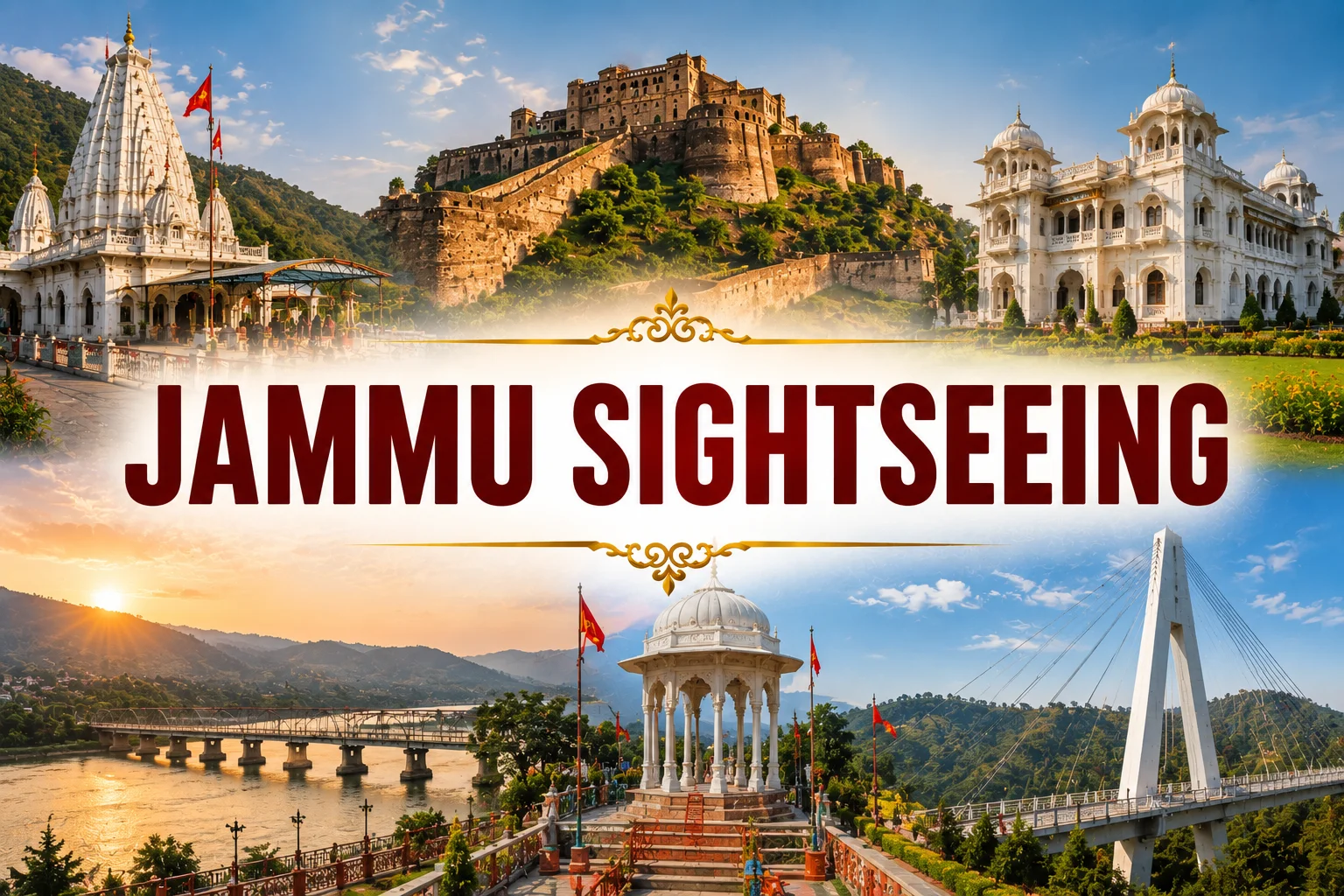
Jammu Sightseeing
- Distance from Katra~48 km
- Travel Time~1.5 hours by road
- Best SeasonOctober to March
The city you pass through, and rarely see
Nearly everyone who comes to Katra passes through Jammu. The airport is here, the railway station is here, and the buses and cabs to the foothills all start here. Yet most visitors treat the city as a transit point, hurrying from the arrivals hall to a waiting car. That is a pity, because Jammu has a layered history, a famous skyline of temple spires and a lively old quarter that rewards even a few hours of attention.
Known as the City of Temples, Jammu has been a seat of Dogra rulers for centuries and serves as the winter capital of the region. Its character is quite different from the Kashmir valley further north. It is warmer, more plains-like, more Punjabi in speech and food, and shaped by a distinct Dogra culture of palaces, miniature painting and devotional music. A half day here gives you a perspective on the region that the yatra alone cannot.
How to see the city: three ways
By cab with a driver. The easiest way to cover several sites in half a day. A driver who knows the traffic can sequence stops sensibly, wait while you visit and take you through the bazaars. This is the best option for families, elders and those with limited time.
On foot in the old city. The heart of the old quarter, around Raghunath Bazaar, is best explored on foot. Lanes are narrow, vehicles are restricted in places and the pleasure lies in wandering. Wear comfortable shoes and keep your bags light.
A hybrid. Take a cab to the major monuments, then walk the bazaars. This is the plan we recommend to most families.
Raghunath Temple: the anchor of the old city
The Raghunath Temple complex is the first place most visitors see, and for good reason. Built in the nineteenth century under the Dogra rulers, it is dedicated to Lord Rama, and it is one of the largest temple complexes in north India. Rather than a single shrine, it is a cluster of temples within a walled complex, with several dedicated to different deities, and the interiors are decorated with gold-toned panels and religious art.
The atmosphere is usually calm, with devotees moving quietly from shrine to shrine, bells ringing and incense in the air. The best time is morning, when worship is in full swing, light is soft and crowds are light. Dress modestly, remove your shoes and be prepared to leave bags and phones in a cloakroom or vehicle. Allow forty-five minutes to an hour for a respectful visit.
The streets around the temple form Raghunath Bazaar, a dense old market selling religious items, sweets, dry fruit, shawls, utensils and everyday goods. Even if you do not plan to shop, walking a few lanes gives you a feel for the city.
Bahu Fort and the temple above the Tawi
On a rocky rise above the Tawi river stands Bahu Fort, one of the oldest structures in the city, with parts said to be several centuries old and later restored by the Dogra rulers. Inside the fort complex is a temple dedicated to Kali, known locally as Bave Wali Mata, which draws a steady stream of devotees, particularly on Tuesdays and Sundays.
The terrace and garden below the fort give wide views over the Tawi river and the city. Families come in the evening to walk, sit and eat snacks. The garden is neat and shaded, and a small aquarium has historically been part of the grounds. For visitors, it is a pleasant combination of spiritual stop and city viewpoint. If you have limited time, this is a good choice for the end of the day, when light is attractive and the heat has eased.
Amar Mahal: the palace on the ridge
Amar Mahal Palace is the architectural surprise of the city. A French-style chateau in reddish sandstone, it was built in the late nineteenth century for a Dogra prince and now houses a museum. Inside are paintings from the Pahari school, portraits of rulers, personal collections and an impressive golden throne.
The museum is a good way to understand Dogra history and artistic life, and to see miniature paintings of a quality and delicacy that surprise many visitors. The grounds look over the Tawi and offer a peaceful place to sit. Check opening hours before you go, since the museum closes on certain days and its schedule can change. Photography rules vary by section.
Mubarak Mandi and the old royal quarter
Mubarak Mandi is a sprawling heritage complex of courtyards, halls and palaces that once formed the seat of the Dogra rulers. It combines Rajasthani, Mughal and European styles, and some wings are being restored. Not every part is open, and access arrangements can change, so check with your driver or hotel. Even viewing the buildings from outside gives a sense of the scale and ambition of the old royal quarter.
If you enjoy architecture and history, this is worth a stop. If you are short on time, it is the first thing to drop.
Ranbireshwar Temple and the crystal lingams
The Ranbireshwar Temple, built in the late nineteenth century, is a large Shiva temple known for its tall spire and for a remarkable collection of crystal lingams in its main hall. It is calm, spacious and photogenic, and a good place to sit quietly. The courtyard and surrounding temples add to its character.
Because it lies near the main city centre, it is easy to combine with Raghunath Temple in a single sequence.
A short history so the sights make sense
Tradition links the founding of Jammu to Raja Jambu Lochan, who is said to have chosen the site after seeing a tiger and a goat drinking from the same pond. Whether or not the story is literal, it is retold with pride and gives the city its name. For centuries Jammu was a hill principality, and in the early nineteenth century it came under the rule of the Dogra dynasty, founded by Maharaja Gulab Singh, who later acquired Kashmir. His successors built many of the temples and palaces you see today.
This history matters because it explains why Jammu feels the way it does. The Dogra rulers were patrons of Hindu temples, of Pahari miniature painting and of a devotional and martial culture. The city blends influences from Punjab, Himachal and Kashmir, and its language, Dogri, has its own literature and songs. The practice of the “Darbar Move”, when the government shifts between Jammu in winter and Srinagar in summer, remains a defining feature of public life, and it is part of why Jammu is called the winter capital.
Knowing this helps you read the city. When you see a palace with French windows and Rajasthani balconies, you are seeing a dynasty that wanted to look outward. When you see a temple with gold-toned panels, you are seeing the faith of rulers who saw themselves as protectors of Dharma.
Dogra art, music and festivals
Jammu has an artistic heritage that is easy to miss on a quick visit. The Dogra school of painting, part of the wider Pahari tradition, produced delicate miniatures of gods, rulers and nature. The museum at Amar Mahal displays many of them, and they reward slow viewing: fine brushwork, jewel-like colours and stories told in small scenes.
Dogri folk music, with its drum, flute and long-line vocal style, is sung at weddings, festivals and fairs. If you are lucky, you may hear it at a temple or a local celebration. Festivals such as Lohri, Baisakhi and the many local fairs give the city a sense of shared joy. At Navratri and Diwali, temples are decorated with lamps and flowers, and the bazaars glow in the evening. If your visit coincides with a festival, it is worth staying for an evening walk.
An evening in Jammu
If you have a night in the city, the evening is a good time to see another side of it. The Tawi riverfront and the garden at Bahu Fort fill with local families after sunset. Street vendors sell chaat, roasted corn and sweet snacks, and the temples are quiet and lit. A walk along the old bazaar lanes is atmospheric in lamplight, though crowded on festival nights. Dinner at a simple local restaurant gives you rajma chawal, kadhi and other dishes that you may not find elsewhere.
If you are spending the night before a morning flight, plan to stay close to the airport or station, since early traffic can be heavy. If you are staying before the drive to Katra, choose a hotel on the Katra side to cut the morning journey.
If it rains
Rain can disrupt the city’s rhythms, but it need not ruin the day. Museums and temple interiors are sheltered, and the old bazaars have awnings that offer cover. A rainy afternoon is a good time to visit Amar Mahal and linger over the paintings, or to settle into a café for tea and pakoras. Carry a compact umbrella and wear shoes that cope with wet stone. Some roads flood quickly, so give your driver room to choose routes.
A sample half-day route
A route that works well for most families:
- 8:30. Leave your hotel or arrive in the city. Begin at Raghunath Temple, when it is calm.
- 9:45. Walk through Raghunath Bazaar, stopping for tea and perhaps a small purchase.
- 10:45. Drive to Ranbireshwar Temple for a quiet half hour.
- 11:45. Visit Amar Mahal and the museum.
- 1:00. Lunch in the city. Rajma chawal, the local speciality, is a must for many visitors.
- 2:30. Bahu Fort and the garden, ending with views over the Tawi.
- 4:00. Return to the hotel, or continue to the airport or station.
If you only have two or three hours, choose Raghunath Temple and the bazaar. If you have a full day, add Mubarak Mandi and a slow lunch.
Food and shopping
Jammu has a distinctive food culture. Rajma chawal, kidney beans cooked slowly with spices and eaten with rice, is the signature dish. You can also try kalari kulcha, a local fried cheese bread, dogri-style dishes, sweet kalaadi and the sweets of the old market. Many dishes are vegetarian, and you will find plenty of options that fit pilgrim rules.
The bazaars sell dry fruit, especially walnuts, almonds and apricots, and Kashmiri and local shawls. Prices vary, and bargaining is common in small shops. For gifts, consider prasad boxes, brass utensils, embroidered shawls and dry fruit gift packs. Buy from established shops, ask for a bill and check weights.
Timing: when to go
October to March is the best season, with comfortable temperatures for walking between sites. In winter mornings it can be foggy, and evenings are cool. April to June is hot, and midday sightseeing is tiring, so plan for early morning or late afternoon. During the monsoon, rain can slow movement and make streets slippery, although the city feels fresh and green.
Festivals add colour. Navratri brings crowds and decoration, Diwali lights the temples and bazaars, and Lohri in winter has its own warmth. Expect traffic to be heavier around these days.
Practical notes
- Traffic in Jammu can be heavy, especially in the morning and evening. Allow extra time between stops.
- Temples have modest dress expectations. Cover shoulders and knees. Remove shoes at temple entrances.
- Many temples do not allow large bags, phones or cameras inside. Leave them in the vehicle if you can.
- Carry small notes for donations, offerings and small purchases.
- Keep an eye on personal belongings in crowded bazaars.
- Check opening hours for museums, which can change by day or season.
Combining Jammu with your yatra
Because Jammu is already on your route, the sightseeing adds little cost. The most convenient moments are the day you arrive, when you may have a few hours before the transfer to Katra, and the day you leave, if your flight or train is in the afternoon or evening. If you have an early flight and no free time, skip it. If you have a long gap, it is an excellent way to use it.
Travelling with elders or young children, keep the programme light. One or two sites and a long lunch will be more enjoyable than a full list.
Tips Before You Go
- Go in the morning. The heat and traffic build quickly in the afternoon.
- Check opening hours for the museum and fort, since they change and some close on specific days.
- Keep your bags light. Temples often do not allow big bags or phones inside.
- Keep some time for the bazaars, which are among the best parts of the city.
- Eat rajma chawal at least once.
- Carry water and a hat in warm months.
Pairs Well With
- Mansar Lake, which lies beyond Jammu on the same road.
- Baba Dhansar for a quieter shrine visit.
- Amritsar if you are continuing north to Punjab after your yatra.
Add This to Your Yatra
We include Jammu Sightseeing as a zero-extra-day, en-route add-on in the wizard. It slots into your existing arrival or departure day rather than needing its own night.
Want Jammu Sightseeing in your itinerary?
Add to My Yatra