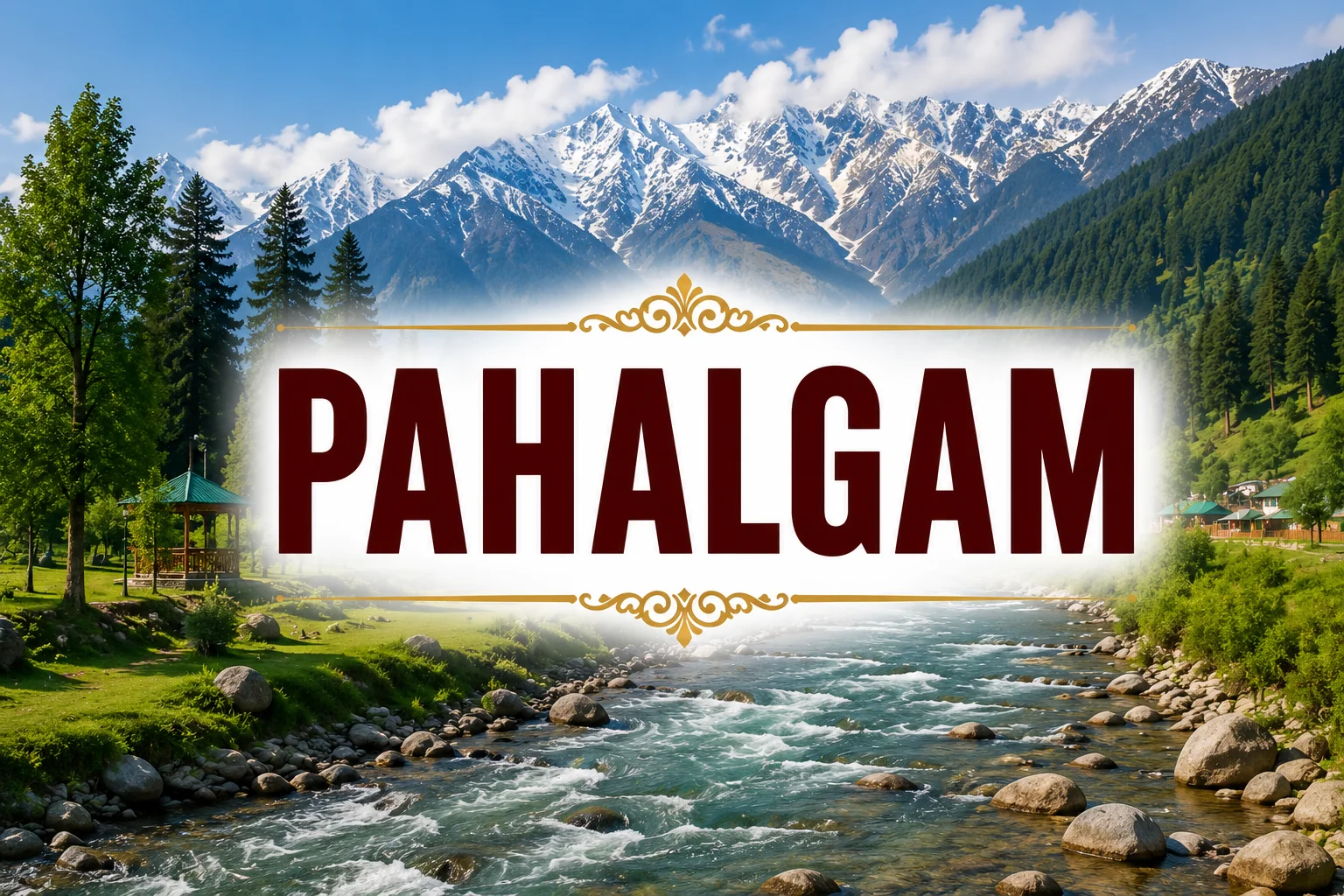
Pahalgam
- Distance from Katra~250 km
- Travel Time~8 hours by road (via Srinagar)
- Best SeasonApril to October
The valley that does not hurry
Some places in Kashmir are about spectacle, and some are about stillness. Pahalgam belongs firmly to the second group. Set along the Lidder river amid pine forest and wide meadows, it has the feel of a village that happens to be surrounded by mountains. Mornings begin with the sound of water, afternoons pass in walks and pony rides, and evenings end around a fire or a pot of tea. For travellers who have just completed a demanding pilgrimage, that rhythm is exactly what the body and mind need.
The name is usually translated as “Valley of Shepherds”, from the Kashmiri words for shepherd and village, and the shepherds are still part of the scenery. In summer, nomadic herders bring their flocks up to the high meadows, living in simple huts, and you may pass them on the trails with sheep, goats and dogs.
Where it fits in the Kashmir circuit
Pahalgam sits about 250 kilometres from Katra, roughly eight hours by road through Srinagar, and from Srinagar it is a further two hours or so up the Lidder valley. This means it is rarely visited directly from Katra. Instead, it is usually part of a multi-day Kashmir extension, reached from a base in Srinagar or visited on the way out of the valley.
Compared with the other main hill destinations, Pahalgam is lower in altitude, at about 2,200 metres, so it is warmer and greener than Gulmarg or Sonmarg and it works better for older travellers. It is also quieter and slower, with more focus on nature than on snow sports or cable cars. If Gulmarg is the dramatic one and Sonmarg the wild one, Pahalgam is the gentle one.
The river and the town
The Lidder river runs through the middle of Pahalgam, clear and cold, fed by glaciers and snowfields on the high peaks. A walk along its banks is the simplest and most satisfying thing to do. Paths lead through pine groves, past wooden footbridges and small picnic spots, and the sound of rushing water accompanies you throughout.
The river is also famous for trout. Fishing is permitted under licence in certain stretches, and if you enjoy angling, your hotel can help with permits and local guides. For non-anglers, trout appears on many menus, though if you eat vegetarian you will skip it.
The town itself is small. A main street has shops selling shawls, dry fruit, woollens and souvenirs, and a few places to eat. There is a golf course on the edge of town, set among pines, and a pony stand where guides offer rides to the surrounding viewpoints.
Aru Valley
Around 12 kilometres from Pahalgam lies Aru Valley, a village at the head of a side valley with a stream, meadows and wooden houses. It is a base for treks to the high lakes, but even a day visitor finds it beautiful. The drive is picturesque, and the valley opens into a bowl of green with snow peaks behind. Ponies and local taxis make the trip easy.
Walk along the river, sit in the meadow, drink tea at a roadside stall and take photographs. In spring and summer, the valley is dotted with wildflowers, and in winter it is under snow. Aru has fewer facilities than Pahalgam, so carry snacks and water.
Betaab Valley
On the way to Chandanwari, about 7 kilometres from town, is Betaab Valley, named after a 1983 Hindi film shot there. It is a green, open valley with a river running through, set against steep pine slopes. It is popular with day visitors, who walk, picnic and photograph. It can be crowded in peak season, with stalls selling snacks and photo props. Early mornings are calmer.
Entry is typically ticketed, and the park is well-kept. It is a very easy place to visit with children and elders, since paths are flat and facilities are close.
Chandanwari
Further up the valley, about 16 kilometres from Pahalgam, is Chandanwari, the starting point of the Amarnath Yatra, the annual pilgrimage to the ice lingam cave in the high Himalaya. During the yatra season, usually in summer, the area is a hub of activity, with camps, security and long lines of pilgrims.
Outside that season, Chandanwari is a snow-and-river landscape. In spring and early summer, a natural snow bridge often spans the Lidder river, and visitors can walk or play on it. Ponies and local cabs reach the area, and in the quieter months, it is a peaceful place. If you are visiting during the Amarnath Yatra, expect restrictions, crowds and changes to access, and check in advance.
Mamleshwar Temple
In the town itself stands the Mamleshwar Temple, a small stone Shiva temple said to be very old, with a simple courtyard and a modest shrine. It is one of the oldest temples in the valley and is linked to the start of the Amarnath pilgrimage tradition. For pilgrims on a Vaishno Devi journey, a quiet visit is a fitting spiritual stop. Dress modestly, and remove shoes at the entrance.
Treks and longer walks
For those with time and fitness, Pahalgam is a gateway to some of the finest treks in Kashmir. The trek to Kolahoi Glacier, the trek to the high-altitude lakes beyond Aru and the routes toward Tarsar and Marsar lakes all begin nearby. These are serious undertakings, usually two to six days, with camping, guides and ponies. They require preparation, fitness and the right season, and should be booked with registered operators.
For lighter walks, there are many options. A day hike from Pahalgam to viewpoints above the town, a stroll along the river to Lidder bridges, or a guided walk through pine forest to a meadow each take a few hours. Your hotel can suggest trails according to your fitness.
Seasons in the valley
April to June. Spring and early summer are lovely. Snow melts, meadows turn green, wildflowers bloom and temperatures are pleasant. Crowds build in May and June, so book early.
July to August. The warmest time of year, with cool evenings. The monsoon brings occasional rain, which can slow travel, but the valley remains beautiful. The Amarnath Yatra period can affect access and accommodation, so check dates.
September to October. Clear skies, crisp air and golden light make autumn a favourite season for photographers. Crowds thin, and prices may ease.
November to March. Winter brings snow and cold. Many hotels close, local transport is limited and roads can be difficult. The valley is quiet and beautiful, but this is a season for experienced winter travellers.
What to eat
Hotels in Pahalgam serve Kashmiri, north Indian and continental meals. Vegetarian travellers can enjoy dal, rajma, paneer, dum aloo, vegetables and rice, with fresh bread. Kahwa and noon chai warm up cold evenings. Fresh walnuts, apples and cherries are sold seasonally. In small eateries, ask what is vegetarian, because gravies sometimes contain meat stock.
Trout fish is the local speciality for non-vegetarians. If you eat fish, ask for freshly caught fish prepared simply.
Who Pahalgam suits best
Pahalgam is probably the easiest of the Kashmir hill destinations for a mixed family group. The altitude is moderate, the terrain is gentle and most sights can be reached by road or pony. Older parents can enjoy the valley views from a car or a riverside bench, children can play on flat meadows and the river, and keen walkers can set off along forest paths. Couples and honeymooners are drawn by the quiet and the scenery, and friends find the trout streams and pony rides fun.
It is less suitable for people who want nightlife, large shopping areas or a high-adrenaline programme. The pace is slow. Dinners end early, shops close at dusk and many places are completely dark after sunset. If you like that, it is a gift. If you do not, you may find it dull after a day.
Birds, flowers and small pleasures
Visitors who slow down notice details. In spring and summer, the meadows and forest edges are full of wildflowers such as buttercups, irises and wild roses. Birdwatchers can spot Himalayan species including the Himalayan bulbul, the black-and-yellow grosbeak, the golden oriole, the white-capped redstart on the river and the occasional hoopoe. Early morning, when mist hangs over the river, is the best time to watch and listen.
Other pleasures include a cup of kahwa at a roadside stall, a walk to a village where women dry apricots and walnuts, a picnic spread on a rug by the water, and an evening around a bonfire at your hotel. These small moments are what many people remember most.
Shopping in Pahalgam
The main market sells shawls, woollen jackets, embroidered items, walnut-wood souvenirs, dry fruit and saffron. Prices are often higher than in Srinagar, but items are convenient. Buy from reputable shops, ask for a bill and check quality, especially with saffron, which is often adulterated. Seasonal fruit such as cherries, apples and apricots can be bought from roadside vendors.
Local woollen caps, gloves and socks are practical purchases, particularly if you underestimated the cold. Pony handlers sometimes sell small items such as stones and shells, but these should be avoided if sourced from the environment.
When it rains
Rain in the mountains can be sudden and heavy, but it need not ruin a trip. Valleys look different in the rain, with mist drifting over pine slopes and the sound of rushing water louder than usual. If you are caught in a downpour, shelter at a tea stall or hotel and wait it out. Keep an eye on the river, which can rise quickly, and avoid low-lying paths. Carry a light rain jacket or poncho, and protect cameras and phones. Landslides can block roads, so check with your driver before travelling and be flexible with your return plan.
During the Amarnath Yatra season
Each summer, usually for several weeks from late June or July, the Amarnath Yatra brings hundreds of thousands of pilgrims through Pahalgam. This transforms the town. Security is tight, traffic is regulated, hotels fill and prices rise. Roads toward Chandanwari are restricted, and some sights may be closed to tourists. If you want a quiet visit, avoid the yatra period. If you want to see the energy of a pilgrimage, you can stay, but book well ahead and follow all instructions from authorities.
If you plan to take part in the Amarnath Yatra itself, that requires a separate registration, medical certificate and preparation, which are outside what we cover on this page.
Getting around
Within Pahalgam, local taxis and pony operators run set routes to Aru, Betaab and Chandanwari. Rates are usually fixed by local associations, and your hotel can tell you the current prices. Hiring a taxi for a full day is more convenient than negotiating each trip. Self-drive access is restricted in some stretches, so using local vehicles is the norm.
Ponies are widely used for short rides to viewpoints. Check the pony’s health, agree the price and route beforehand, and tip the handler fairly. Walking is pleasant for short distances.
A two-night plan
Day one. Arrive from Srinagar by late afternoon. Check in, walk along the Lidder river and eat dinner early. Rest well.
Day two. After breakfast, take a taxi to Chandanwari, stopping at Betaab Valley on the way. Return via Aru Valley or have lunch there. Spend the afternoon at the Mamleshwar Temple and in the town. Enjoy tea by the river at dusk.
Day three. Slow morning, optional pony ride or walk, then drive back to Srinagar or onward.
This plan gives a relaxed rhythm with plenty of rest. If you want to add trekking or fishing, add a night.
Staying safe and respecting the place
Mountain weather can change quickly, with sudden rain or cold. Carry a waterproof layer. River water is cold and fast, and drownings occur every year when visitors wade or swim carelessly, so keep children away from the edge and do not enter the water. Ponies and rough paths can be risky for the unsteady. Ride only if you are comfortable.
Conditions on the Kashmir routes change quickly. Before you book, check the current J&K travel advisories and highway status, because heavy rain or snow can close the road for hours. Leave a spare day in your plan rather than a tight connection home. Follow local instructions and keep identification with you.
Respect the local community. Dress modestly, ask before photographing people, buy from local stalls and take your rubbish with you.
Tips Before You Go
- Hire local ponies or taxis for the valleys rather than trying to walk everything.
- Carry warm clothes. Even in summer it turns cold after sunset.
- Local transport rates are usually fixed, so ask your hotel for the current prices.
- Conditions on the Kashmir routes change quickly. Before you book, check the current J&K travel advisories and highway status, because heavy rain or snow can close the road for hours. Leave a spare day in your plan rather than a tight connection home.
- Carry some cash, since ATMs and card machines can be unreliable.
- Book early for May, June and the Amarnath Yatra period.
Pairs Well With
- Srinagar, which is the base and the connection point.
- Sonmarg and Gulmarg for a longer Kashmir circuit.
Add This to Your Yatra
Pahalgam is one of the multi-day Kashmir attractions in our wizard. Add it and we’ll extend your itinerary and update pricing to include the extra travel days.
Want Pahalgam in your itinerary?
Add to My Yatra