Quick Answer
Katra, the base town for the Vaishno Devi trek, is best reached by a train to Shri Mata Vaishno Devi Katra (SVDK) station if one runs from your city, or by flying into Jammu and covering the remaining distance of roughly 50 km by road, which takes about an hour to two. Buses and private cabs along National Highway 44 are the third option and work well from Punjab, Haryana, Himachal and Delhi. Whichever way you come, every pilgrim needs a free yatra registration and RFID card before leaving Katra on foot. You can start it online before you travel or complete it in Katra on arrival.
This guide goes through each route, what to expect on the way, how to choose, and how to set up your arrival day so the climb starts well. If you want city-specific advice, our pages on Delhi, Mumbai, Chandigarh and other starting points go into fares, timings and local tips.
The geography in one paragraph
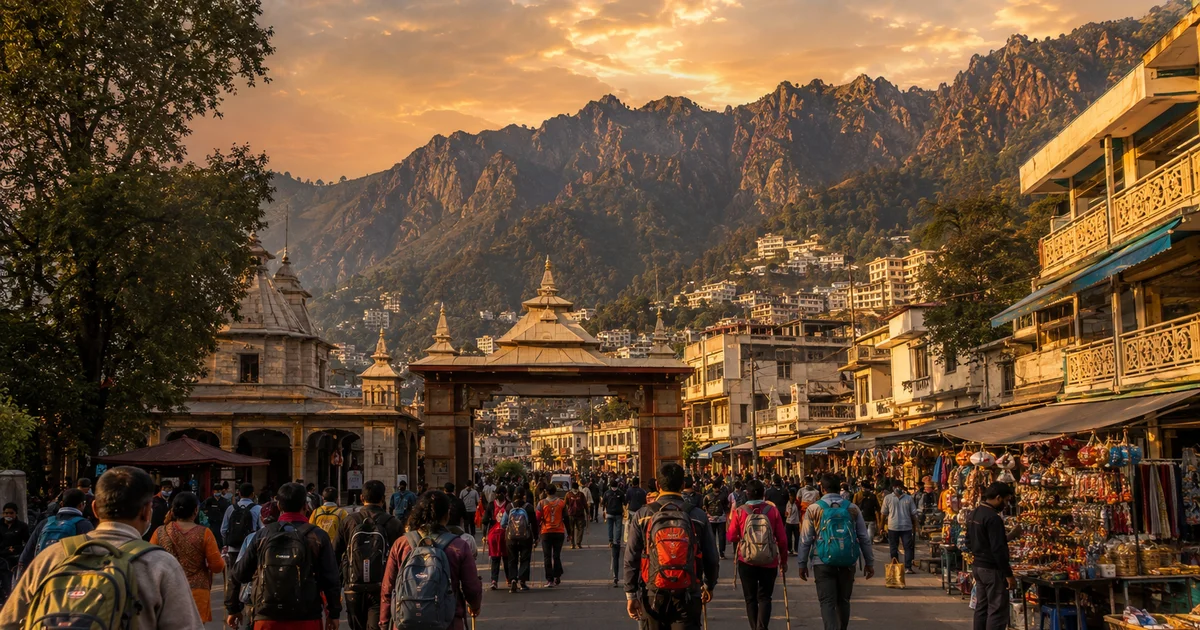
It helps to hold a simple picture. Jammu is the big city and transport hub of the region, with the airport and the main railway junction, Jammu Tawi. Katra is a smaller town in the foothills of the Trikuta range, about 45 to 50 km north of Jammu, and it exists mostly for the pilgrimage. The trek to the shrine starts a short distance from Katra at a place called Banganga. Katra has its own railway station, which is a terminus, so trains that come in end their journey there. This means you can often skip Jammu altogether if a direct train suits you, and otherwise Jammu is the gateway.
Route 1: By train
Rail is the most comfortable way to reach Katra from much of north India. The station, named Shri Mata Vaishno Devi Katra, is close to the town and to many hotels, and arriving here instead of at Jammu Tawi removes the road transfer entirely.
Direct trains to Katra. Services run from Delhi and several other cities. The Vande Bharat Express from New Delhi is the fastest of them, taking roughly eight hours in the daytime, and other overnight and weekly services connect cities including Mumbai, Kolkata, Ahmedabad, Pune, Bangalore and Hyderabad on various days. Timetables, days of operation and train numbers change, so always confirm on the IRCTC site or app before you plan around a specific train.
Trains to Jammu Tawi. If no direct train to Katra suits you, book to Jammu Tawi, which has many more services. From there you have three options for the last 45 to 50 km:
- A local or passenger train to Katra, where available. These are slow but cheap.
- A taxi, either shared or private. The drive takes about an hour and a half to two hours depending on traffic and time of day, and prepaid counters at the station help avoid haggling.
- A bus from the Jammu bus stand, which is cheaper but slower and less convenient with luggage.
Booking tips for trains. Reservations open well in advance, and trains to Katra fill fast around Navratri, school holidays, long weekends and Diwali. If your preferred train is full, check the waiting list, nearby dates, the tatkal quota and alternative trains to Jammu Tawi. Book the return at the same time as the outward journey, since Katra-bound trains are busiest in the days before and after festivals, and the way home is where people get caught.
Route 2: By air
The nearest airport is Jammu (IXJ), about 50 km from Katra. It has regular flights from Delhi, Mumbai, Bangalore, Hyderabad, Pune, Kolkata, Srinagar and a few other cities, and some are direct while others involve a stop, most often in Delhi.
From the airport to Katra. Prepaid taxis at the airport take roughly an hour and a half to Katra, allowing for traffic through Jammu. Buses are available but slower. If you are travelling in a group, a shared tempo traveller or a larger cab is usually the cheapest per head. Some hotels arrange airport pick-ups, so ask when you book.
When flying makes sense. Flying wins from the south and west of India, where train journeys last a day or more. From Mumbai, Bangalore, Hyderabad and similar cities, the flight shortens a long trip to a few hours in the air. From Delhi, the train and flight are closer in total time once you add airport procedures and the road transfer, so choose on comfort and price.
Flying tips. Jammu is a small airport with a limited number of daily flights, so fares rise sharply at peak times and the cheapest flights often sell out first. Avoid very tight connections, particularly in winter when fog can delay flights, and in the monsoon when weather can disrupt them. If your flight arrives late in the evening, plan to stay in Jammu or book a hotel in Katra that allows late check-in.
Route 3: By road
Katra lies on National Highway 44, the long north-south route that runs through Punjab, Jammu and onward to Kashmir. You can reach it by bus, private cab or your own vehicle.
Buses. State transport corporations and private operators run buses from Delhi, Chandigarh, Amritsar, Ludhiana, Jalandhar and other cities to Jammu and Katra. Overnight AC and sleeper services are popular from Delhi. Book ahead in peak season, and check where the bus drops you, since some stop on the highway and need a short local transfer.
Private cab. For groups of four or more, a hired cab from Chandigarh, Amritsar or Punjab is often competitive on price and far more flexible. From Delhi the drive is about 600 km and takes ten to twelve hours, so it suits only groups willing to start early and take breaks.
Driving yourself. It is possible, and the national highway is generally good, but you will cross into Jammu and Kashmir at Lakhanpur, where vehicle checks and queues can add delay, particularly at festival times. Carry your driving licence, vehicle papers and identity documents, and avoid driving through the night after a long day. Parking in Katra can be limited near the busiest points, so ask your hotel where to leave the car.
How to choose: a quick guide
- From Delhi: the Vande Bharat or an overnight train is usually best. A cab suits larger groups.
- From Punjab, Haryana, Chandigarh and Himachal: road or train. The shorter distances make a cab attractive.
- From Mumbai, Gujarat, Maharashtra: fly to Jammu, or take a train if you have time and have booked early.
- From Bangalore, Hyderabad, Chennai and the south: fly. The train is long, and flying saves a full day each way.
- From Kolkata, the east and north-east: fly where possible, or take a long-distance train to Jammu Tawi or Katra.
- If you have elders or young children: prefer the option with the fewest changes, even if it costs more.
Arrival day: the plan that works
How you spend the first day affects the whole yatra. A good pattern looks like this.
- Check in and rest. Reach Katra by afternoon if you can, and settle in. Do not start the climb on arrival day if you have just travelled overnight.
- Complete the yatra registration. If you have not done it online, go to a registration counter in Katra (see the next section) and get your RFID card. Do this early in the day, before queues build.
- Eat an early, light dinner. Katra is strictly vegetarian, so expect dal, roti, rice, paneer and vegetables.
- Pack your day bag. Carry water, a light jacket, a spare pair of socks, ID, your registration card, some cash and any medication.
- Sleep early. Most pilgrims start between 3 and 6 a.m., so an early night is the best preparation.
Free yatra registration and the RFID card
Every pilgrim must register before starting the yatra. The Shrine Board states that registration is free and fully computerised, and that pilgrims without a valid registration will be turned back at the first check post at Banganga. Registration is available both online and in person.
How it works.
- Registration can be done online through the Shrine Board's website or app, and in person at the Yatra Registration Counter near the bus stand in Katra. Other counters operate at places such as the railway station. Opening hours have varied, so confirm current timings when you plan.
- You get an RFID yatra access card, which you wear during the journey and which is scanned at checkpoints along the route.
- Each person's details are recorded, and a photograph is taken at the counter.
- The Shrine Board requires you to pass the first check post at Banganga, about 1.5 km from the registration counter, within six hours of the card being issued. Plan your registration so you can start soon afterwards, and do not collect your card the evening before if you plan to start the next afternoon.
What to carry. Take a valid photo ID for every traveller, including children, and have them present when registering. If you registered online, keep the confirmation and bring all travellers to the counter to get their physical cards.
Why it matters. The system helps the Shrine Board manage crowds and safety on the route. It also means a group member who skips registration can hold up the whole party, so make registration a first-evening task.
What to do once you are in Katra
After you arrive, you will notice how much of the town is set up around the yatra: shops selling prasad and offerings, taxis and autos waiting near the bus stand, and signs pointing toward Banganga. A few local tips help.
- Getting to the start. Most hotels can arrange a taxi or auto to Banganga, and some budget hotels offer free pickup. Ask the night before about early-morning arrangements.
- Ponies, palkis and battery cars. If anyone in your group needs help on the climb, find out the options and booking arrangements before the morning. Our guide to the battery car explains how it works.
- Helicopter. If you plan to fly part of the route, tickets must be booked in advance on the Shrine Board's site. See our helicopter guide.
- Luggage. Keep big bags at your hotel and take only a small bag up the mountain. Cloakrooms at the Bhawan are free, but valuables and electronics should stay at the hotel.
Common mistakes to avoid
- Booking a tight connection. A missed flight or train in Delhi can cost a whole day.
- Arriving at night and starting the climb at dawn. You will be exhausted. Give yourself at least one night.
- Forgetting to register, or registering too early and missing the six-hour window.
- Ignoring weather and road alerts. In the monsoon and winter, landslides, fog or snow can close roads or delay flights.
- Not booking the return journey. Katra-bound travel is only half the plan.
- Taking too much luggage. Large suitcases are a burden at the busy points of the town and cannot go up the mountain.
Frequently Asked Questions
What is the nearest railway station to Vaishno Devi? Shri Mata Vaishno Devi Katra station, in Katra town. Jammu Tawi is the larger junction about 45 to 50 km away.
What is the nearest airport? Jammu Airport (IXJ), roughly 50 km from Katra, about an hour and a half by road.
How long does it take from Delhi to Katra? By Vande Bharat, about eight hours. By overnight train it is longer, and by road ten to twelve hours.
Is yatra registration compulsory? Yes. All pilgrims must register, and those without a valid RFID card are turned back at the Banganga check post. Registration is free.
Can I register online before I travel? Yes. Online registration is available through the Shrine Board, and you complete the process at a counter where required. Keep the six-hour rule in mind for crossing Banganga.
Is it better to fly or take the train? From the south and west, flying saves time. From north India, the train or road is usually simpler. Choose based on distance, price and who is travelling.
Can I drive my own car? Yes, though you should expect checks at the Jammu and Kashmir border and limited parking in Katra. Many pilgrims prefer a driver for the long drive.
Plan the Rest of Your Trip
Once you know how you are getting to Katra, the next step is the hotel, local transport and the climb itself. Our two-minute wizard shows a day-wise plan and price, covering the hotel, transfers, helicopter and nearby excursions.