Patnitop
- Distance from Katra~85 km
- Travel Time~2.5 hours by road
- Best SeasonApril–June for meadows, December–February for snow
A hill station that works as a rest day
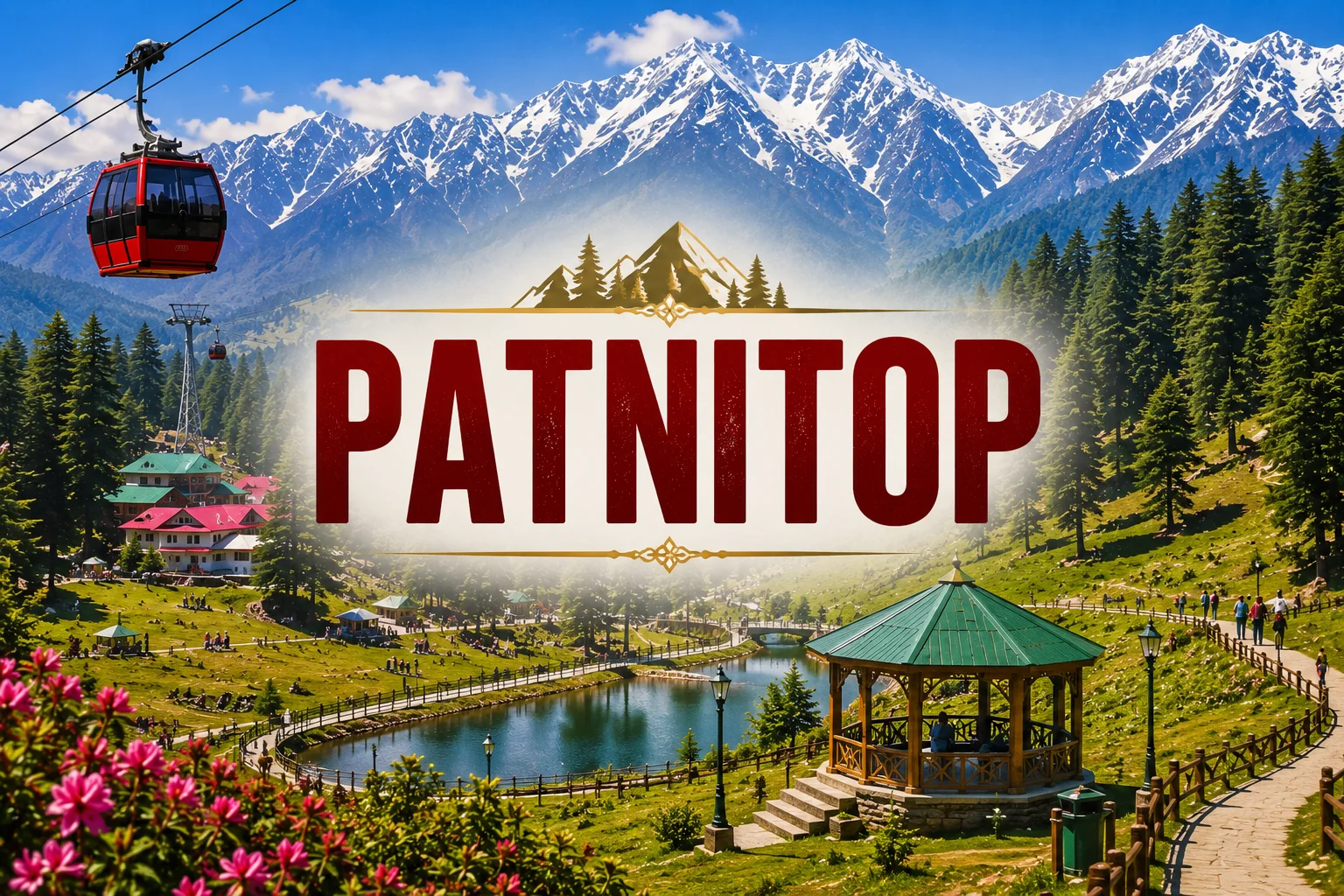
After the climb to the cave shrine, almost every family arrives at the same realisation: the legs are tired, the schedule has been early and crowded, and what everyone wants now is cool air, a place to sit and nobody shouting. Patnitop is the most natural answer within reach. At about 2,000 metres, on a broad plateau ringed by pine and deodar, it offers a complete change of scene from the busy pilgrim town of Katra, and it does so without demanding any real effort from visitors.
The name is often spelled Patnitop or Patni Top, and locals will tell you it comes from a princess, “Patan da Talab”, a pond that once stood in the meadow. As with many place names in the region, the story is told fondly and varies from teller to teller. What is not in doubt is the setting. The plateau looks out over the Chenab valley, the air is cool and fragrant, and the pine forest closes in around a wide grassy clearing that has made the place a summer retreat for generations.
What you actually do there
Patnitop is a place for slow activities. The main meadow can be explored on foot in a couple of hours, and the simplest and best thing to do is to walk it, sit on the grass, drink tea and watch the light change on the trees. Families spread out rugs for picnics, children run about, and couples find a quiet spot under a deodar.
Beyond the meadow, a handful of activities are offered depending on season. A cable car (gondola) runs seasonally, giving a view over the forested slopes. Pony rides are common. Adventure operators in the wider area, especially at nearby Sanasar, run paragliding and, at times, zorbing, though availability changes with weather and time of year, and you should check safety arrangements locally. For those who prefer culture, the Naag Temple, a small shrine dedicated to the serpent deity, is a short distance away and is regarded as a place of local pilgrimage.
For more energetic visitors, nature trails run through the forest, and the viewpoints along the highway let you stop for photographs without a long walk. There is nothing here that requires fitness or special skill.
The calendar: how the place changes through the year
Patnitop is not one place but several, depending on when you go.
December to February: snow. This is the season that fills hotels. Patnitop receives regular snowfall, and for many families from the plains, it is the closest and easiest place to see and touch snow. Children make snowmen, adults slide on the slopes, and there is a general holiday atmosphere. It is also cold, with sub-zero temperatures at night and the occasional road closure after heavy snowfall. Book hotels early for snow weekends, carry chains or hire a driver experienced in winter roads, and do not plan to drive back late in the evening.
March to April: awakening. The snow retreats, the meadows turn green again, and the days become mild. This is a good time for those who want cool weather without crowds.
May to June: peak summer escape. Families from the plains arrive to escape the heat. The meadows are at their greenest, the sky is clear and the views over the valley are excellent. It is busy, particularly on weekends, and prices rise. Mornings are the best time.
July to September: monsoon. Rain, mist and fog define the season. The forest is lush and the air is fresh, but visibility can drop sharply, roads can be slippery, and landslides sometimes affect the highway. If you go, keep your plans flexible and avoid tight schedules.
October to November: quiet clarity. After the rains, the skies clear, the air is crisp and the crowds thin. This is a lovely season for those who value calm. Evenings are cold, so pack warm layers.
Getting there and what the journey is like
Patnitop is about 85 kilometres from Katra, a drive of roughly two and a half hours along the Jammu to Srinagar national highway. The road climbs through the Shivalik foothills, and the drive is a pleasure in itself, with views of deep valleys, terraced fields and distant ridges. The road is a major highway and can have heavy truck traffic, especially in the early morning and late afternoon, so allow extra time.
Most visitors travel by private cab, which is the easiest option. If you are going in winter, make sure your driver is experienced in snow and that the vehicle is in good condition. If the road is closed or snow is heavy, plan an alternative or stay at your Katra hotel.
A full day trip, planned properly
A day trip is quite feasible but requires an early start. Leave Katra by seven in the morning so that you reach the plateau by ten. Spend the late morning on the meadow and walking trails, have lunch at one of the restaurants or a picnic, and then, if energy remains, visit the Naag Temple or take a short drive toward Nathatop for higher views. Start the return by three in the afternoon, so that you are not on the highway after dark, especially in winter.
If you want a calmer experience, stay overnight. A night in Patnitop gives you a long evening, a slow morning and the chance to see the forest at dawn. You also avoid the drive back after a long day. Hotels range from basic to comfortable, and in snow season they fill quickly.
Travelling with children and elders
Patnitop suits all ages. Children enjoy the open meadow, the ponies and the snow. Elders appreciate the cool air and easy terrain. A few precautions apply. Altitude is modest, but older people with heart or breathing problems should carry their medicines and avoid exertion. In winter, the cold can be hard on the very young and very old, so layers, caps, gloves and warm socks are essential.
Toilets and food options exist, but are not plentiful, so plan your meals. Carry water and snacks, particularly if you have children. In snow season, keep spare clothes, as wet gloves and shoes are almost certain.
What to eat
Hotels and small restaurants serve north Indian vegetarian and non-vegetarian meals, though since you are close to Katra, many visitors choose vegetarian food out of respect. Simple dishes such as rajma, dal, rice, parathas and hot tea are widely available. In winter, a hot bowl of soup or a cup of kahwa is exactly what the body asks for. Fresh fruit and dry fruit are good to carry. Avoid heavy meals before pony rides or drives on winding roads.
Safety notes you should take seriously
Adventure activities are weather-dependent and may close without notice. If you want to try paragliding or other activities, use a licensed operator, ask about safety equipment and trained pilots, and do not feel pressured to participate. Roads can be slippery when it snows, so avoid driving back late in winter. Pay attention to weather forecasts and local advice, and be ready to change plans.
Cold exposure is the most common problem. Dress in layers, protect your head, hands and ears, and warm up regularly. Avoid wet clothing. If someone in the party shows signs of cold stress, such as shivering, confusion or numb fingers, move to shelter immediately.
Nearby places that extend the day
Patnitop sits among a cluster of lesser-known places, and a driver who knows the area can add one or two without much extra time.
- Sanasar. A small plateau with a saucer-shaped meadow and a tiny lake, a short drive from Patnitop. It is the main base for paragliding in the area and a quieter, more open alternative to the Patnitop meadow.
- Madhatop. A grassy ridge with open views, reached by a short drive and a gentle walk. It is a good spot for a picnic when Patnitop itself feels crowded.
- Sudh Mahadev. An ancient Shiva temple set in a forested gorge, popular with pilgrims, and associated with a large trident said by devotees to be of great age. It is a serious detour, more than an hour from the plateau, so treat it as a separate outing.
- The Naag Temple. Close to the main plateau, small and peaceful, and a reminder that this is a pilgrimage landscape and not only a holiday spot.
Each of these has different rhythms. Sanasar suits families who want activities, Madhatop suits those who want silence, and Sudh Mahadev suits devotees. If you have only a day, choose one.
Where to stay, and what to expect
Accommodation ranges from simple guesthouses to comfortable resorts and a few government-run lodges. In snow season, almost everything is full on weekends, and prices rise. The general pattern is that simple rooms are warm enough with blankets and heaters, but hot water can be limited, power cuts can happen and internet is unreliable. If comfort matters, book a larger property and confirm heating, hot water and food arrangements in advance.
When you arrive, check that the room has adequate heating, that bedding is clean and dry, and that there is a plan for meals. Small hotels often cook to order, which means a wait, so ask what time dinner is served. Carry cash, because card machines and UPI do not always work in hill areas.
Mistakes we see visitors make
- Starting too late. Leaving Katra after ten in the morning means arriving at noon, with little time to enjoy the meadow before the return drive.
- Underpacking warm clothing. Even in May the evenings can be cold, and in winter it is much more serious.
- Treating it as a quick photo stop. Patnitop rewards a few hours. If you only have forty minutes, the drive may not be worth it.
- Ignoring the road forecast. In winter and the monsoon, conditions change fast. Ask your driver and hotel the day before.
- Overloading the day. Trying to combine Patnitop, Nathatop, Sanasar and Sudh Mahadev leaves everyone tired and rushed. Pick two at most.
- Skipping rest after the yatra. Do not go straight from the descent to a hill drive. Give your body a night.
A sample overnight plan
For families who want to stay, here is a plan that works. On the first day, leave Katra by eight, stop for tea at Udhampur, and reach Patnitop by noon. Check in, have lunch, rest for an hour, and then walk the meadow in the afternoon light. In the evening, enjoy hot snacks and tea, and perhaps a bonfire if your hotel offers one. On the second day, wake early for a walk, have a slow breakfast, and decide between Nathatop and Sanasar for the morning. Start back by one, and you will reach Katra by evening.
This plan gives you a full evening and morning on the plateau and avoids driving the highway in the dark. It costs one hotel night, but most families agree it transforms the experience from a rushed excursion into a proper break.
Is it worth the time?
If you have only a few days, and the yatra is your main aim, you might decide not to add Patnitop. That is a reasonable choice. But if you have a spare day, or if your group includes children and elders who would enjoy a gentle outing, it is one of the best additions. It also suits couples who want a relaxed break after the intensity of the pilgrimage. Many travellers say that a day at Patnitop was the part of the trip they remembered with the most warmth, because it gave them a chance to sit, talk and breathe.
Tips Before You Go
- April to June is best for green meadows and clear days. December to February brings snow.
- Adventure activities such as paragliding are sometimes offered in season. Confirm availability and safety arrangements locally.
- Roads can be slippery when it snows. Do not plan to drive back late in winter.
- Book hotels early for snow weekends, which fill up quickly.
- Carry warm layers, even in summer, because evenings drop to cool temperatures quickly.
- Fuel up and use the toilet in Udhampur or Kud, since facilities on the plateau are limited.
Pairs Well With
- Nathatop for higher viewpoints a little further along the same road.
- Shiv Khori as another day out from Katra.
- Mansar Lake for a quiet lakeside day on a separate trip.
Add This to Your Yatra
We bundle Patnitop with nearby Nathatop as a single day-excursion option in the wizard. Add it and we’ll build out the extra day and transport in your itinerary automatically.
Want Patnitop in your itinerary?
Add to My Yatra